KAMPALA, Uganda – Byron Oketayot likes to save, and to serve. On the rugby field
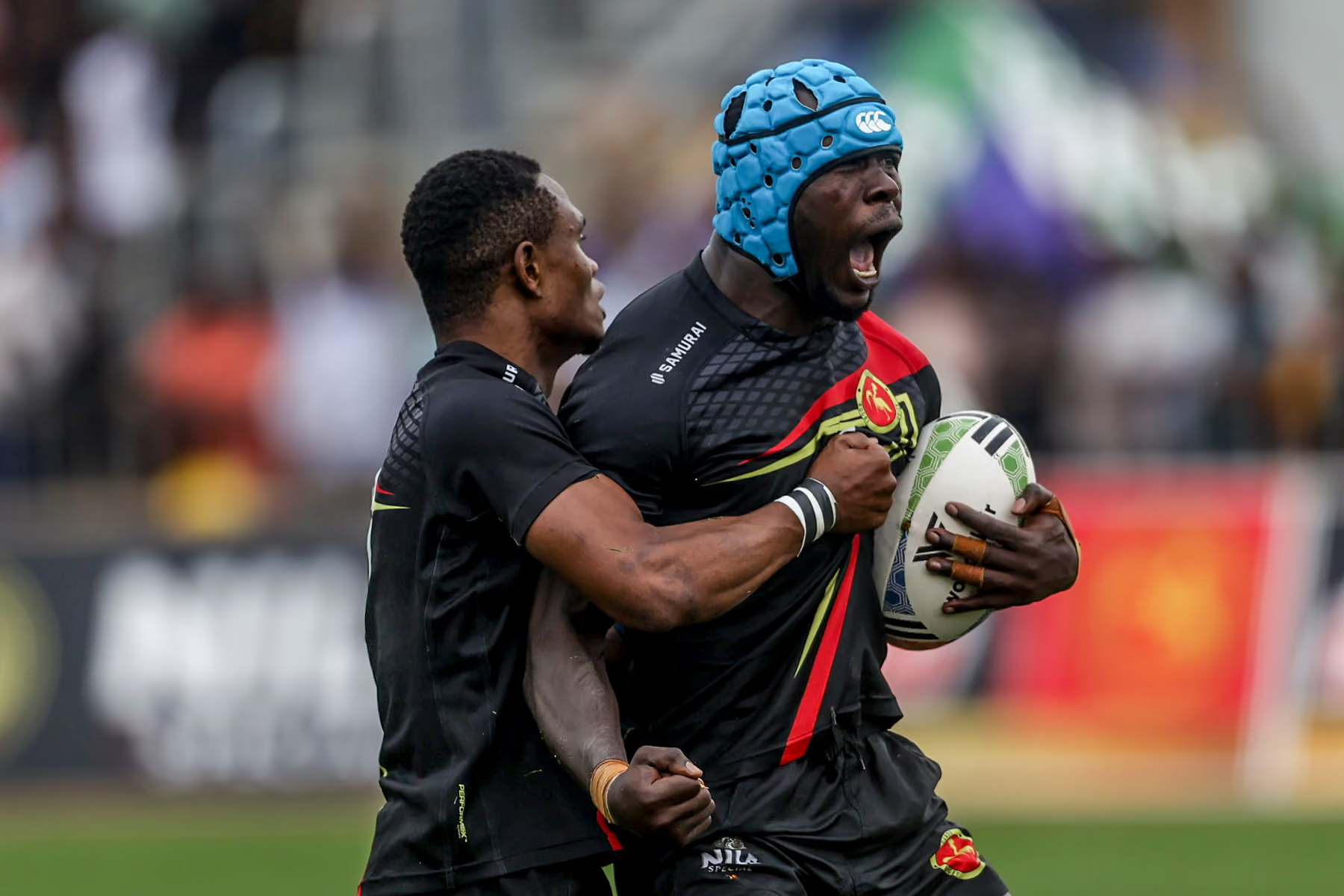
KAMPALA, Uganda– Byron Oketayot likes to save, and to serve. On the rugby field, Uganda’s captain is a fierce competitor known for his bone-crunching, try-saving tackles. But off the pitch, behind the rugged exterior, lies a deeply compassionate man with a passion to serve others because he knows what it means to go without.
“Before I started, my family was disunited, they never used to talk,” says Oketayot. “Now, they are getting along. They might not be together, but they’ve eased the tension. They talk about me, asking each other, ‘how is Byron?’ or ‘did you see how he played yesterday?!’ Even when they are not talking about me, they talk to each other about other issues that are important and affect them. So, for me, my biggest achievement has been to reunite the family.”
Oketayot’s empathy forcomes from lived experience. His is a story of hope where there once was none and of how generosity from others changed the course of his life.
Born in Gulu in northern Uganda, Oketayot’s family moved to Kampala when he was just two years old. But life in the capital wasn’t easy. “We moved back because of internal family fights, and also my parents could no longer afford to pay rent in Kampala,” he says. “Mum and dad didn’t have money, so my uncle initially paid school-fees for me, one of my sisters and my brother.”
An American sponsor eased the pressure for a while, but when they returned home and contact was lost, things took another hard turn. “I started doing odd jobs, helping people lay bricks on our land, and selling the bricks.” That hustle helped Oketayot stay in school, but not always. In senior three, he had to sit out the third-term exams because the family couldn’t afford the examination fees.
Despite everything, sport offered a way out. His father had been a boxer, and his mother a kick-boxer of modest ability. “I told my mother that I was going to make it in life through football and track-and-field, that I would get certificates and scholarships,” he says.
He didn’t know anything about rugby until a coach named David Olara, affectionately known as “Speedo”, spotted him at Gulu High School. “I didn’t know how to spin the ball or pass. I just said, ‘let me stay on the wing, give me the ball and I’ll run and score’… They told me, ‘you are fast, you are strong, just don’t pass the second line. When you are there, ground the ball, don’t let it slip out of your hands’.”
A football and athletics scholarship took him to Bishop Angelo Negri College, but rugby followed him there, and he kept playing, first at school, then for the local club, Gulu Elephants.
In 2014, Oketayot got his first call-up for the Uganda Under-19 team under coach Robert Seguya. The Young Cranes won a tournament in Kampala, and Byron took home a small amount of money — and a bigger dream. “My parents were initially against me playing rugby,” he recalls. “Now they had seen my pictures and articles in the newspapers. They started to warm up to the idea.”
Oketayot rejoined Gulu Elephants, but had a bigger goal in mind: getting back to school. That year, Seguya was promoted to coach the national team and selected Oketayot in 2016 — but it came with a new struggle. “I didn’t have anywhere to stay in Kampala. We trained Monday, Wednesday and Friday. I was traveling overnight by bus from Gulu — that’s 333km each way — three times a week. That’s 36 hours on the road per week!”
Coach Seguya intervened and found him a home with Godwin Kayangwe, Uganda Rugby President then secretary. “Godwin showed me real love, he gave me everything. I was like his oldest son and I call him ‘papa’ to this day. It takes someone so special to do that and I pray for Godwin every day.”
Determined to finish school, Oketayot completed his studies at Kyambogo College with the help of his club, Rhinos RFC. In 2017, he made his Sevens debut for Uganda — and helped the team qualify for the 2018 Rugby World Cup Sevens. “I started all the games,” he says. “It helped me put my eyes much more onto rugby. The money wasn’t much, but it helped. I didn’t have many responsibilities at that time.”
He enrolled at Kyambogo University, initially aiming to become a lawyer. But his past changed his path. “A lot had happened in my life, and I thought I needed to help those less fortunate as I had been. So I studied community-based rehabilitation.”
Today, Oketayot mentors and trains people with disabilities. He works closely with a 14-year-old boy named David Apangu, who was born with cerebral palsy. David couldn’t walk or stand on his own since birth. After a few years of sessions, he’s now able to move without support and execute personal care.
His dream is to open a rehabilitation centre — for people with disabilities, and for injured athletes.
Now 30, Oketayot has over 40 caps and has been promoted from vice-captain to full captain for the 2025 Rugby Africa Cup. “It has been a different kind of pressure,” he admits. “You start to see things differently. Leadership, being exemplary, understanding the game better, how you handle yourself in public and on your social media. People must respect you, and you must respect them too.”
But for all he’s achieved, what matters most is what rugby gave him beyond the pitch, purpose, family, and the power to give others hope.
Tomorrow, Saturday, July 19, Uganda and Côte d’Ivoire will clash in the Rugby Africa Cup in Kampala, with relegation on the line for both teams. While Namibia and Zimbabwe will clash in the final of the Rugby Africa Cup. The winner will secure a spot at the Men’s Rugby World Cup Australia 2027. The losing finalists will remain in Kampala for another week to take on the United Arab Emirates in a decisive play-off. The UAE finished as runners-up in the 2025 Asia Rugby Emirates Men’s Championship.
The 2025 Rugby Africa Cup features eight of the continent’s top teams, Uganda, Namibia, Kenya, Morocco, Algeria, Cote d’Ivoire, Senegal, and 2024 champions Zimbabwe, competing in a knockout tournament for the African spot at the Rugby World Cup,the winner will also qualify for the second division of the Nations Cup. Notably, with all qualification set to conclude by the end of 2025, a first in Men’s Rugby World Cup history, all participating teams will be confirmed ahead of the Rugby World Cup 2027 Draw.The World Rugby Rankings will inform team seedings for the tournament draw. Fans interested in tickets for RWC 2027 can register at here.
All matches will be played at Mandela National Stadium and broadcast live by official partner NBS Sport (https://nbssport.co.ug), while also streamed globally on RugbyPass TV and the Rugby Africa Facebook page. Tickets are available to local fans through MTN MoMo platforms (https://www.mtn.co.ug/momo/), the official payments partner, with both general admission and VIP options currently on sale. Supporters across Uganda and the region are encouraged to book early and be part of this historic milestone in African rugby.
To Access Tickets:Click here
Streaming
Match Day 1: Tuesday 08 July 2025 (Local Time) (EAT)
10:00 – Zimbabwe (43) vs Morocco (9)
12:00– Algeria (41) vs Cote d’Ivoire (6)
14:00– Namibia (55) vs Senegal (17)
16:00– Kenya (32)vs Uganda (24)
Match Day 2: Sunday 13 July 2025 (Local Time) (EAT)
10:00 – Cote d’Ivoire (3) vs Senegal (28)
12:00 – Morocco (24) vs Uganda (12)
14:00 – Algeria (7) vs Namibia (21)
16:00– Zimbabwe(29) vs Kenya (23)
Match Day 3: Saturday 19 July 2025 (Local Time) (EAT)
10:00 –Senegal vs Morocco (5th Place Final)
12:00 – Algeria vs Kenya (3rd Place Final)
14:00 – Côte d’Ivoire vs Uganda (7th Place Final)
16:00– Namibiavs Zimbabwe
Media Contact:
About Rugby Africa:
Rugby Africa (www.RugbyAfrique.com) is the governing body of rugby in Africa and one of the regional associations under World Rugby. It unites all African countries that play rugby union, rugby sevens, and women’s rugby. Rugby Africa organizes various competitions, including the qualifying tournaments for the Rugby World Cup and the Africa Sevens, a qualifying competition for the Olympic Games. With 39 member unions, Rugby Africa is dedicated to promoting and developing rugby across the continent. World Rugby highlighted Ghana, Nigeria and Zambia as three of the six emerging nations experiencing strong growth in rugby.