Rwanda Returns To International Rugby With Unity At The Heart Of Their Journey
After a prolonged absence from international competition, Rwanda’s women’s sevens team is returning to the continental stage, carrying a message of unity and reconciliation through sport. (Match schedule, tickets, copyright free images, and streaming information below)
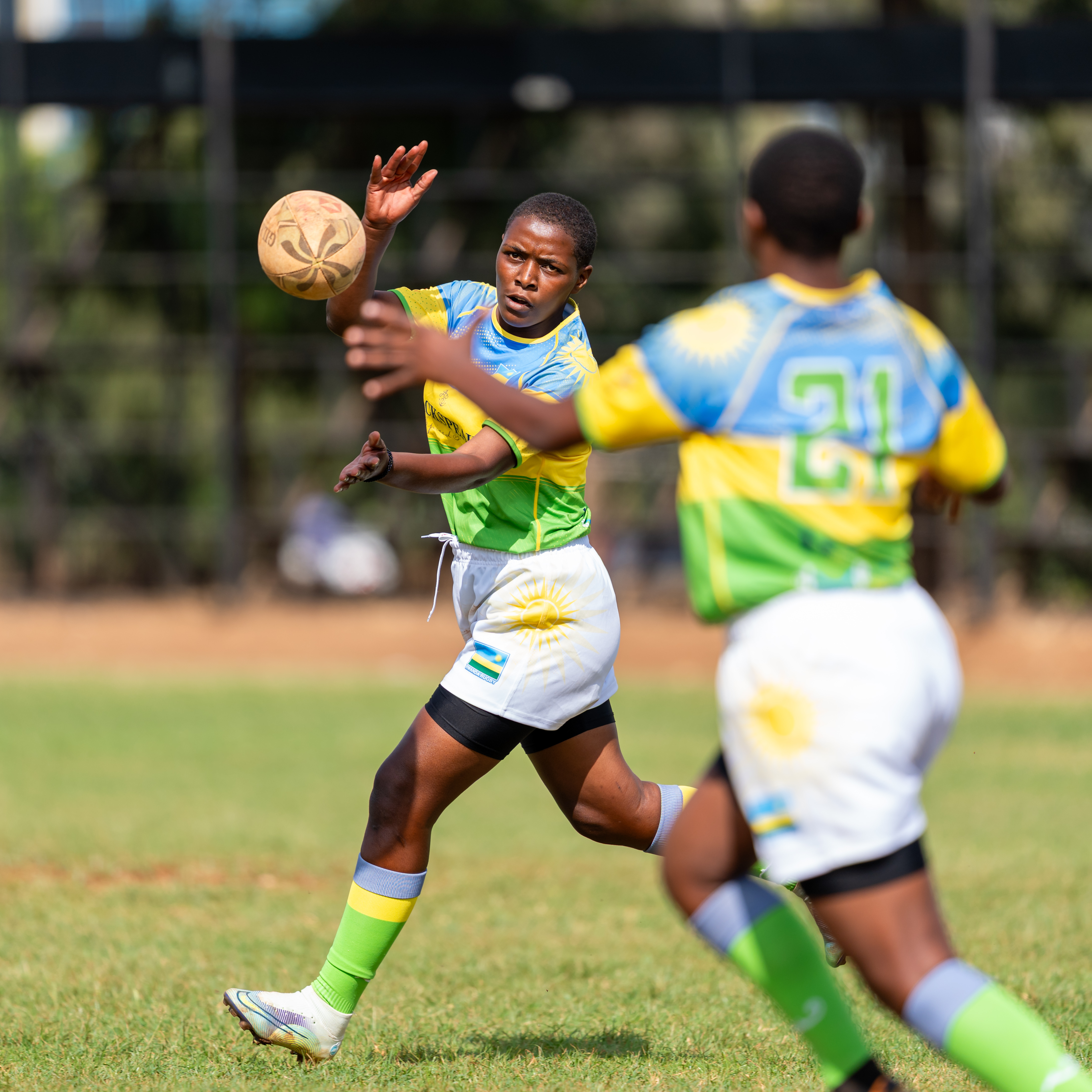
NAIROBI, Kenya – For a country rebuilding itself after a troubled and divided past, rugby’s values resonate deeply with Rwanda.
The Rwanda women’s sevens team, heading to Kenya for the 2026 Africa Women’s Sevens this weekend after a prolonged absence from international competition, will carry that message of togetherness as sport continues to play its role as a rallying point.
Donatien Ufitimfura, Chief Administrator of the Rwanda Rugby Federation, understands rugby’s responsibility in this important cause.
“Rugby plays an important role in promoting unity and reconciliation in Rwanda following the 1994 Genocide against the Tutsi,” Ufitimfura tells Rugby Africa Media.
“We appreciate the Government of National Unity for creating an environment that promotes reconciliation, inclusion and equal opportunities, in which sport can contribute to national healing and social cohesion.
“Guided by its core values of respect, integrity, solidarity, discipline and teamwork, rugby brings people together beyond any form of discrimination. Some Genocide survivors who have played rugby have found a sense of family, friendship and belonging within the rugby community. Through those shared experiences, rugby continues to heal trauma and strengthens relationships.”
Every year, Rwanda stages the Genocide Memorial Rugby Sevens tournament to commemorate the 1994 Genocide against the Tutsi.
“It’s an annual tournament organised with the support of the Ministry of Sports and the Rwanda National Olympic and Sports Committee,” Ufitimfura says.
“Its primary purpose is to use sport to honour the victims of the 1994 Genocide, particularly those who were involved in sports, while promoting remembrance, unity and reconciliation.”
Modern rugby was introduced to Rwanda in 2000 by two French nationals, Pierre Offere and Jean-Yves Reagan, who were working in the country for the Red Cross.
“They are recognised as pioneers of modern rugby in Rwanda and initially established the game through two clubs,” says Ufitimfura.
“The Rwanda Rugby Federation was subsequently established in 2002 to provide institutional leadership and coordinate the sport’s development. Therefore, unlike the historical introduction of some other sports during the colonial period, modern rugby in Rwanda traces its organised beginnings to 2000, rather than to the Belgian colonial era.”
Women’s rugby, particularly the sevens format, can help reduce the gap between established and emerging rugby nations. The women’s game and the shorter format also offer an accessible entry point for new followers, allowing emerging rugby nations to use them as a springboard for growing the sport in their communities. It is a model that is also working for Rwanda.
“Yes, Rwanda is following the same pathway, with women’s rugby and Sevens serving as an important entry point for the growth of the game,” Ufitimfura says.
“This aligns with the Government of Rwanda’s commitment to gender equality and women’s empowerment, as well as World Rugby and Rugby Africa’s strategic priorities for expanding women’s participation. At grassroots level, particularly in Under-12 Tag Rugby, participation between boys and girls is approximately equal. However, the gap becomes more evident as players progress into secondary school and adult competitions. This is reflected in the participation figures: the men’s National League has 11 teams compared with six women’s teams, while Sevens tournaments attract approximately 12 men’s club teams and eight women’s teams. To address this gap, the Rwanda Rugby Federation is deliberately investing in initiatives such as Rugby Rising Play and Get Into Rugby programmes. Sevens rugby is a strategic entry point because of its accessibility and integration into inter-school and university competitions.”
The Rwandan team arrived in Kenya as one of the tournament’s underdogs. However, they understand their strengths and how best to use them as they take to the field at the RFUEA Grounds in Nairobi.
“Our greatest strengths are commitment, resilience, speed and teamwork,” says Ufitimfura.
“As a relatively small-sized team, our philosophy is to exploit space, move the ball quickly and maintain a high tempo, rather than rely on physical strength. We focus on quick ball recycling, intelligent support lines, mobility and collective defence to maximise our strengths. Our immediate goal is to compete with discipline, gain valuable international experience and assess our progress against established African teams. After a prolonged absence from international competition, our focus is on rebuilding confidence and competitiveness. Beyond the tournament, we aim to strengthen grassroots and domestic women’s rugby, nurture more talent and establish a sustainable pathway towards consistent competitiveness at continental level.”
Pool A
- South Africa
- Zambia
- Zimbabwe
- Rwanda
Pool B
- Kenya
- Tunisia
- Ghana
Pool C
- Uganda
- Madagascar
- Mauritius
- Burkina Faso
To Access Tickets: Click Here
Where to watch?
Rugby Pass TV: https://rugbypass.tv/home
Rugby Africa YouTube: https://www.youtube.com/RugbyAfricaOfficial
Rugby Africa Facebook: https://www.facebook.com/RugbyAfrica
Saturday, 7 November 2026 (EAT)
- 09:00 – Madagascar v Mauritius (Pool C)
- 09:22 – Uganda v Burkina Faso (Pool C)
- 09:44 – Tunisia v Ghana (Pool B)
- 10:06 – Zambia v Zimbabwe (Pool A)
- 10:28 – South Africa v Rwanda (Pool A)
- 11:44 – Madagascar v Burkina Faso (Pool C)
- 12:06 – Uganda v Mauritius (Pool C)
- 12:50 – Zambia v Rwanda (Pool A)
- 13:12 – South Africa v Zimbabwe (Pool A)
- 13:34 – Kenya v Ghana (Pool B)
- 14:50 – Mauritius v Burkina Faso (Pool C)
- 15:12 – Uganda v Madagascar (Pool C)
- 15:56 – South Africa v Zambia (Pool A)
- 16:18 – Zimbabwe v Rwanda (Pool A)
- 16:40 – Kenya v Tunisia (Pool B)
Sunday, 8 November 2026 (EAT)
- 09:00 – B1 v Best 3rd (Cup Quarter-Final 1)
- 09:22 – C1 v A2 (Cup Quarter-Final 2)
- 09:44 – B2 v C2 (Cup Quarter-Final 3)
- 10:06 – A1 v 2nd Best 3rd (Cup Quarter-Final 4)
- 10:28 – 3rd Best 3rd v 3rd Best 4th (9th Place Semi-Final 1)
- 10:50 – Best 4th v 2nd Best 4th (9th Place Semi-Final 2)
- 12:07 – Loser Match 19 v Loser Match 20 (5th Place Semi-Final 1)
- 12:29 – Loser Match 21 v Loser Match 22 (5th Place Semi-Final 2)
- 12:51 – Winner Match 19 v Winner Match 20 (Cup Semi-Final 1)
- 13:13 – Winner Match 21 v Winner Match 22 (Cup Semi-Final 2)
- 13:35 – Loser Match 23 v Loser Match 24 (11th Place Final)
- 13:57 – Winner Match 23 v Winner Match 24 (9th Place Final)
- 14:59 – Loser Match 25 v Loser Match 26 (7th Place Final)
- 15:24 – Winner Match 25 v Winner Match 26 (5th Place Final)
- 15:53 – Loser Match 28 v Loser Match 27 (Bronze Final)
- 16:32 – Winner Match 28 v Winner Match 27 (Gold Final)
Written by Enock Muchinjo
Media Contact:
About Rugby Africa:
Rugby Africa (www.RugbyAfrique.com) is the governing body of rugby in Africa and one of the regional associations under World Rugby. It unites all African countries that play rugby union, rugby sevens, and women’s rugby. Rugby Africa organizes various competitions, including the qualifying tournaments for the Rugby World Cup and the Africa Sevens, a qualifying competition for the Olympic Games. With 40 member unions, Rugby Africa is dedicated to promoting and developing rugby across the continent. World Rugby highlighted Ghana, Nigeria and Zambia as three of the six emerging nations experiencing strong growth in rugby.